The United States will make a return to the moon on January 25, marking a significant milestone after a period of 50 years
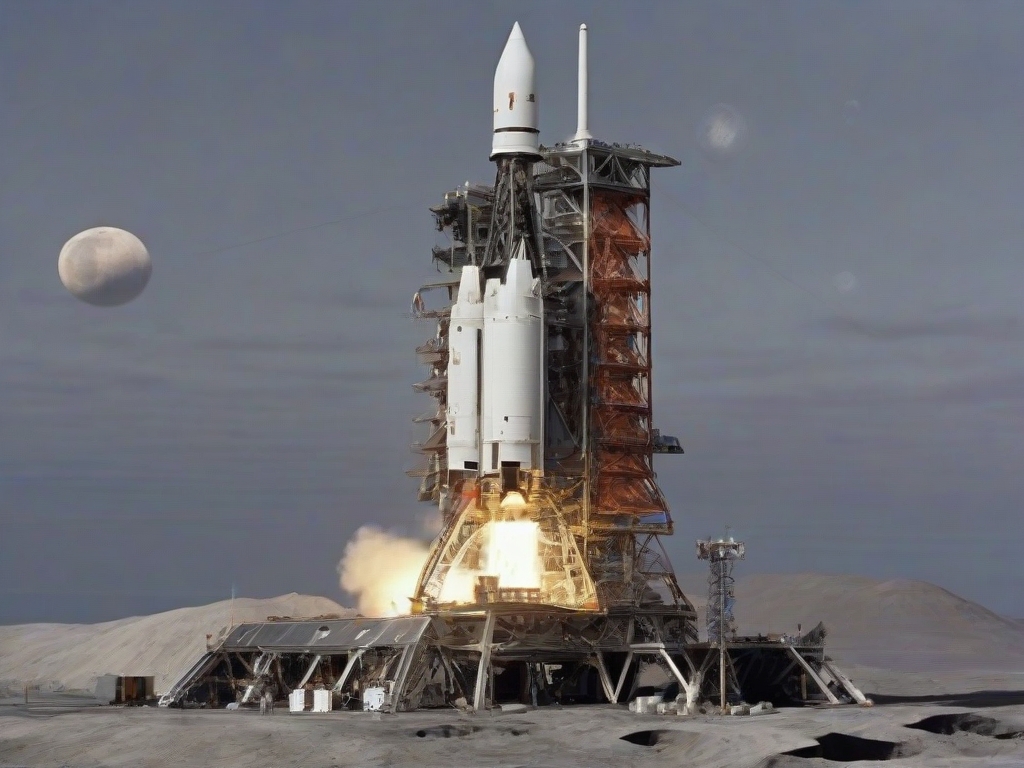
The CEO of a potentially pioneering private firm said that the United States would make another attempt to land a spacecraft on the moon on January 25, more than half a century after the last Apollo mission.
The lander, dubbed Peregrine, will be unmanned. According to John Thornton, CEO of Astrobotic, the lunar exploration mission will transport NASA equipment for the purpose of studying the lunar environment in preparation for NASA's Artemis human missions.
A few years ago, NASA made the decision to hire American corporations to transport scientific experiments and technology to the moon. This programme is known as CLPS.
These predetermined-price agreements have the potential to facilitate the establishment of a lunar economy and provide transport services at a reduced cost.
"One of the major obstacles we face in our endeavour is the task of executing a launch and landing on the lunar surface at a significantly reduced cost," said Thornton at a press event held at his company's headquarters in Pittsburgh.
"Simply about half of the lunar surface missions have succeeded," stated the academic.
"Undoubtedly, it is an intimidating endeavour." At every turn, I shall be filled with both dread and anticipation of my attempt.
The initial launch of the new rocket, dubbed Vulcan Centaur, is slated to take off from Florida on December 24th, under the management of the ULA industrial organisation.
According to Thornton, when the probe is launched, it will need a few days to enter lunar orbit. However, it will have to wait until January 25th to try landing in order to ensure optimal lighting conditions at the designated area.
The fall will be conducted automatically, devoid of any human interference, while being closely observed from the company's control centre.
During the spring season, the Japanese start-up iSpace made an initial effort to become the pioneering private firm to successfully land on the moon. However, the mission concluded in failure, as it resulted in a crash. Israel had a significant setback in 2019. Only four nations have achieved successful lunar landings: the United States, Russia, China, and, most recently, India.
Aside from Astrobotic, NASA has entered into agreements with other firms, including Firefly Aerospace, Draper, and Intuitive Machines.
The latter is scheduled to launch on a SpaceX rocket in January.
"The NASA leadership is cognizant of the potential hazards and has acknowledged the possibility of failure on certain missions," said Chris Culbert, the manager of the CLPS programme.
"Although not every landing may result in success, CLPS has already made a significant contribution to the development of the commercial infrastructure required to establish a lunar economy," he said.
NASA aims to create a lunar outpost via its Artemis programme.