Is China's new mystery pneumonia outbreak a cause for concern?
The good news is that this epidemic does not seem to be a COVID-19 clone, at least not at this point in time. That doesn't mean it couldn't or hasn't occurred in a similar fashion, however.
While it's true that China hasn't reported any "unusual or novel pathogens," that doesn't necessarily bode well. After all, it was the World Health Organization (WHO) that waited until March 2020—two months after the first reports of COVID spread—to declare the virus a pandemic, thus helping to conceal the problem's true scope even as it broke out in Europe and the United States.
The World Health Organization (WHO) is my go-to source when it comes to this matter. It's not that they couldn't be convinced to carry water for China again; it's just that their explanation makes the most sense: that the repeated COVID lockdowns in China until 2022 created an environment where children weren't exposed to common respiratory infections like the flu, RSV, and mycoplasma. Since they hadn't encountered these infections in the previous many years due to the closures and limitations, their immune systems reacted slowly, a phenomenon called an immunological pause, upon eventual exposure.
Because our lockdowns ended earlier in 2022, re-exposing the public to the prevalent respiratory viruses sooner, this argument explains why we experienced an early and severe RSV and flu season here in the US.
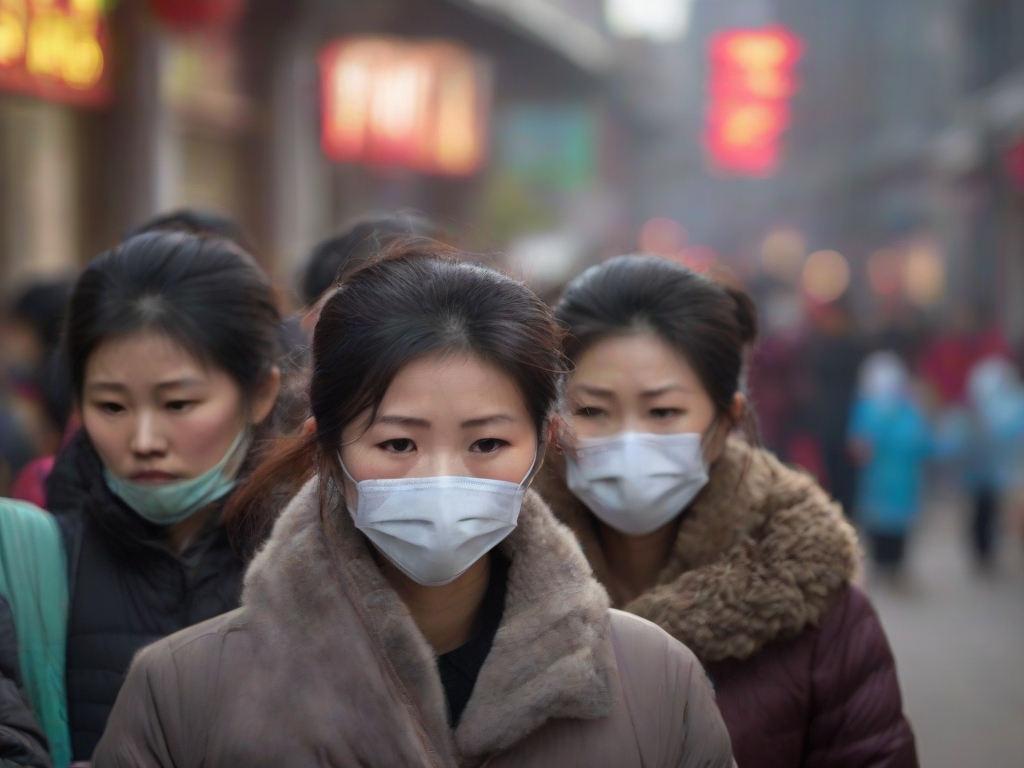
In China, hospitals are once again seeing clusters of pneumonia in children. Reports indicate that influenza-like illnesses are on the rise earlier this season compared to the past three years. However, the absence of widespread infections across all age groups further suggests that a novel pathogen is not to blame for this outbreak.
Parents and children wait in the outpatient section of a Beijing children's hospital on November 23, 2023. As a respiratory illness continues to spread in China's northern regions, the World Health Organization has requested further data in an effort to inform public health measures to minimize the likelihood of infection. According to the World Health Organization, China has seen more cases of "influenza-like illness" since the middle of October compared to the same time last year, in 2015, 2016, and 2017.
The National Health Commission of China has determined that the most common pathogens causing pneumonias and lung infections, particularly in children, are coronavirus, influenza, mycoplasma pneumonia, and RSV. Amidst current patterns in respiratory illnesses, the World Health Organization has asked for further clinical and epidemiological data from impacted children, as well as laboratory results.
Multiple news outlets and social media outlets have reported on large numbers of youngsters hospitalized with "pneumonia," but have failed to identify the specific kind of pneumonia that is causing these cases. If China's lengthy history of underreporting infectious epidemics is any indication, this inaccuracy is cause for concern. The global community looked askance at the government's decision to withhold information during the 2003 SARS outbreak, and their disapproval of the decision has only grown after the 2020 SARS COV 2 pandemic.
Several prominent figures in the field of infectious diseases have informed me that they completely disregard any public health reports emanating from China.
Meanwhile, the World Health Organization (WHO) has reiterated its previous recommendations to remain home, wear a mask while unwell, and update vaccines. Some Chinese populations, particularly those who do not get full government subsidies, have a less-than-ideal vaccination uptake rate, according to recent research.
This isn't just a Chinese issue; it's a global one that helps fuel major epidemics.
Two main takeaways emerge from this. One is that long-term, severe limitations have negative public health impacts that have equally negative rebound effects. Second, and this is hardly ground-breaking, we should not blindly believe Chinese health reports.
Even if this virus isn't a new killer like COVID, the next one may be, and it could come out of a place like China, which has a lot of people but doesn't share much information. All nations must agree to a global system of open monitoring or face severe economic penalties. Since viruses have no respect for national boundaries, protecting public health is an issue of global security.
Dr. X is a clinical professor of medicine at New York University Langone Health. Marc Siegel has written extensively on a variety of topics, including "COVID: The Politics of Fear and the Power of Science." He is both the host and medical director of the "Doctor Radio" show on SiriusXM.