Ideas: "the herb Massa currently budgets Viceroyalty of the Río de la Plata fate."
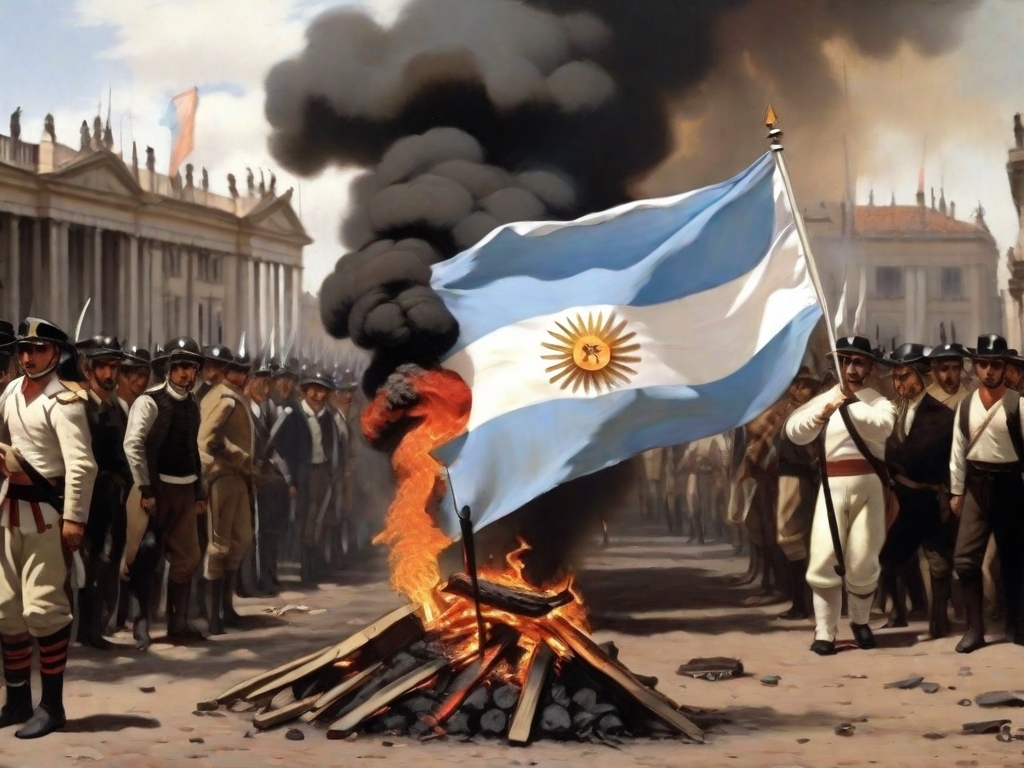
A leader of a country like Argentina needs more than the ability to muddle through speeches and propose the annihilation of his opponents to succeed. Her name was Patricia Bullrich, and she didn't make it beyond the primary election.
There is no way an unstable person like Javier Milei, who has promised to stop decades of benefits for the majority of people, leave the country broke, and sever ties with the key economic partners, could ever rise to the position of head of the national government. Sergio Tomás Massa, the country's acting Minister of Economy, has presided over average monthly inflation rates of above 10% during the last 12 months.
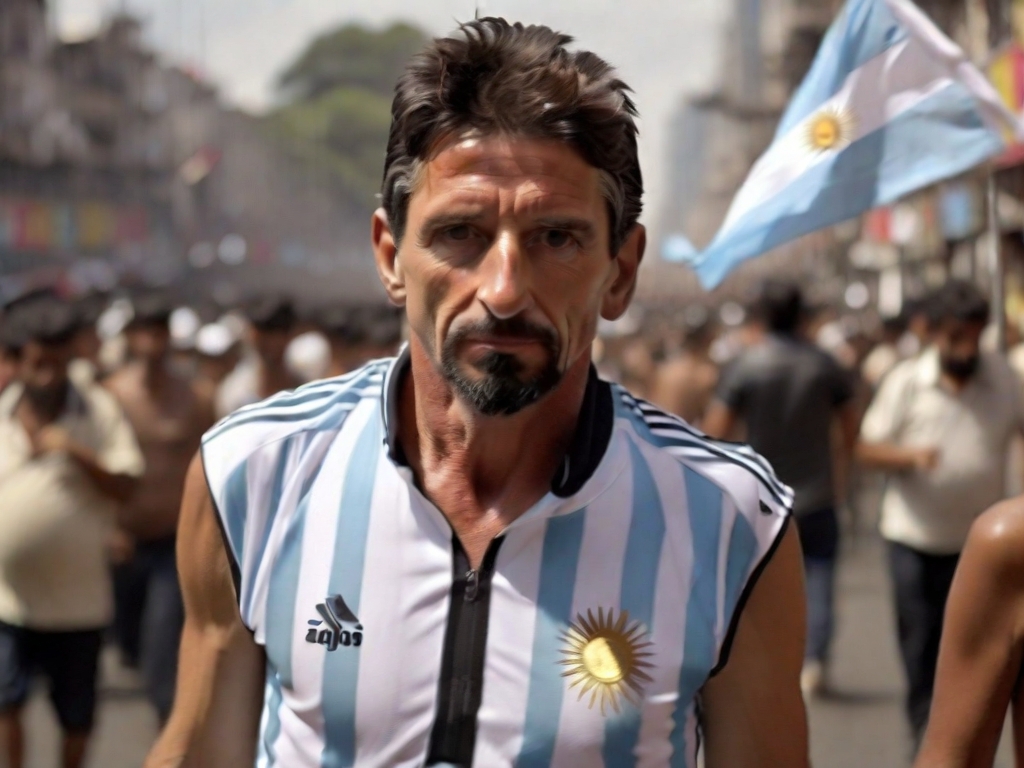
One of these two is literally a hair's breadth away from becoming president. Absurdity, history, disillusion, and, undoubtedly, terror, determined so. Citizenship's orphanhood, disappointment, and decline of its material potential culminated in August and October voting behaviour.
Disjointed Milei replaced the "let these individuals all go" of a century ago that exploded in the streets of the picket line and in the institutions of a president per hour, until giving birth to a management born in Patagonia, Peronist, redistributive, and epic. That nearly 30 per cent of voters who backed him got the hell away from a liter of milk being impossible to buy to feed the children, watching the barbecue almost at the distance of a jewel, the lack of rights for so many young workers, and, even, salaries that do not reach even for those who work in white.
Two months later, the Peronist muscle, its proverbial neighbourhood militancy, the clear conscience of neighbours who got the vote one by one in neighbourhoods, churches, stores, transport queues... they decided to accompany the effort of Sergio Massa, who, despite wearing the most comfortable suit that a candidate can wear at this stage of the country, that of Minister of Economy of a calamitous administration, came out explaining that, in reality, he is not him, that he w He rose 9 points and was 7% ahead of the "anarcho-libertarian" candidate.
In case you haven't gotten the point yet, let's pretend this is the label for the people who want to see the state collapse so that big business can run the country by controlling the economy and the market, effectively stealing from the people of the country to enrich themselves and multinational corporations while also managing graveyards where the bodies of those that died will rest at harmony.
Toss the tortilla over.
Massa signalled to the chairman of the Budget Commission of Deputies that he invited this body to a session in an urgent way to design a plan for 2024 with 1% of fiscal surplus on the same night he was the most voted in the first round. Carlos Heller, the most ideologically consistent parliamentarian, proposed ending the financial norms of Martnez de Hoz, which 40 years of constitutionalism failed to demolish, and funding this feat in weak times by taking rent from powerful economic and financial groups through a progressive tributary structure. This should have made the listener's mouth water.
The ministerial candidate thinks that increasing employee perks is necessary if he is to accomplish his objective of 1%, rather than merely reviewing the state parties and making the usual modifications that hurt the majority. There is a wide variety of tax breaks available to the wealthy.
According to the explanations given to the Commission members, for instance, 2.34 percent of all privileges correspond to tax regulations and exceptions; 2.38 percent arise from digital platforms; 3.0 percent of GDP is resigned to the benefits of those who do not pay income tax; in basic Spanish, this would be judges. This "inequitable situation" extends to rural properties and centenaries of Argentines with properties on the outside.
According to the minister, Congress is responsible for determining whether tax breaks or levies need to be repealed or amended in order to balance the state's budget. The candidate has already set a route; he has immersed himself in the future Argentina that he wishes to rule. Milei has already given a fair warning that he will not be following this course of redistribution and equalization.
The dictatorial Victoria Villarruel screamed "imppuestazo" at the suggestion of rethinking the budget strategy during the terrible private discussion of the vice presidential candidates.
Controversy in the weeds
There has been little influence on ballot design from televised debates in Argentina. Face-to-face television encounters may shift the needle of the amperimeter a few millimetres, making analysis of citizen behaviour difficult if not impossible in the presidential election scenario posed at the beginning of this letter.
This column already speculated on the derivations that can be taken by Horacio Rodríguez Larreta, the Leftist Bregman (who came up with a Pollo Sobrero with a clear reading of Mao's thesis On Contradictions), Juan Schiaretti, and, now, those of the repudiation of radicalism and of the disillusioned of the "anti-dollarizing" PRO and the "anti-caste" miles, in the face of Mauricio Macri's brazen boarding of the ultra-liberal's heeled ship.
The TikTok "libertarians" ruled the show early on in the campaign, gaining support and votes thanks to their digital supremacy in the industry. In response to the "phenomenon" that seemed to ensnare the first voters or young people, many specific juvenile consumption tribes turned their backs and even launched rejection campaigns, outdoing the technical counter-offensive of massism and the sectarianism/negacionismo/homofobism of Miley and Villarruel.
To illustrate, Argentine fans of the most popular Korean group, BTS, repudiated the declarations of "hatred and xenophobia" of the sector, and "otakus," readers of manga and anime, called to vote against it because dollarization would increase the price of those products, both of which were previously unknown to the majority public.
Lali Espósito (12 million followers on the networks) and Wos (7 million) rapped "I'm not a false lion and I don't ranch with cats" at the Deportivo Morón stadium to an enraptured audience as they chanted "He who doesn't jump, voted for Milei" in support of Macri, intensifying the fight in this space that "cupped" the, additionally, now allies of Macri. In a "very fine" election, however, such meaningless phrases might slow down voters, disarm their intentions, and even flip their votes.
American singer-songwriter and businesswoman Taylor Swift (276 million followers) landed at the +Monumental Stadium in River to preach against racism, for justice, gender equality, and diversity, accompanied by local "Swifties against La Libertad Avanza," who formally expressed their opposition to the liberal candidate and qualified him as "representative of the anti-democratic right," comparable to thugs.
A debate has been the rallying cry for a while now, and for good reason; not only does it suffer from methodological flaws, but it's also quite difficult to measure a flan in the midst of an earthquake. After the first round of elections, they modified the drift they were delivering, and, against the vantage point of the Union for the Homeland that was developing with rhythm, they went on to place Milei on top.
Use of the System of Private Propaganda of the Media of the Corporations to create a sense of "triumph" among voters demoralized by that defeat, by the patinas of his candidate, and by his embrace of "the caste" that so repudiated and that, in the majority of cases, especially of the youth, was decisive to opt for "the new one." Fearing that a "winning relaxation" would deactivate some of the militant tide, provincial and municipal, which "turned" the mood and pushed its candidate to the centre of the stage, massism's power plants shut down.
This is the setting in which "the debate" has the potential to significantly impact the citizenship choice, which is here distinguished between voters, blank voters, and abstentionists or tourists for the very first time in Argentina's political history. in a phenomenon not seen since Ral Alfonsn stood on the balcony of the Cabildo of Buenos Aires on December 10, 1983 and embraced the democratic crowd: a very high percentage of absences from the polls and empty envelopes or with invalid papers in those boxes that will contain the decision of the course of this dramatic moment of the country.
Sergio Massa demonstrates his identity and characteristics. A former liberal, now a smooth Peronist and efficient manager, who promotes Perón's Peronism of National Unity and the fraternal embrace of the Third Worldism of this multipolar globalization in which China or Brazil is essential for the survival of the powerful, medium, and small workers... Something Milei does not understand or despises. People would be even more hopeless a few months into a new administration. That's why it's such a conundrum that many people believe Massa "is the change," despite his "impossible" qualifications and those of the other candidates mentioned at the outset.
Wearing that attire, he will take the stage at the Faculty of Law of the National University of Buenos Aires to talk for 2 hours about the economy, education, and health.
Foreign Policy, Economic Growth, Civil Liberties, and Democratic Integration
They will do so without papers, as agreed by the common sense of the National Electoral Chamber in the face of a race such as the present one, taking into consideration that a president presides, he does not copy; he may roam about the stage, talk... They don't seem so in the face of one candidate who weeps over a photo of his dead dog adviser, reads his declarations of principles, and explodes if they contradict him, and another who, whenever he became president, he accepted to get on the Titanic of Argentina's administration at its worst moment, betting on turning the crisis into his great opportunity. Both candidates have spent the past year trying to project an image of courage bordering on resoluteness.
Remember both, and particularly their teams who, with the exception of the shameless attractiveness of those who know they are losers in advance, like Myriam Bregman, fall into the trap of attempting, in vain, to adjust the discourse to the clock rather than imposing on it. That example, to act as if talks enter in one, two, or three minutes whereas in reality it would take anything from ten to fifteen minutes only to read the titles.
This is how they attempt to introduce a million sentences that are neither comprehensible nor spontaneous (as was the case with Agustn Rossi last Wednesday). Very well-paid specialists, both domestic and international, may plot to dominate the minute hand with the discourse in order to get the candidate to say only the bare minimum, but say it clearly; to destroy his opponent's previous statements; to contextualize incoherences and nonsense; and to speak in a natural, friendly, and conversational tone. Most public school educators might suggest it to their children as early as fourth grade.
As was formerly the case in every doorbell, square, transport, school, and workplace, women and men of all ages will be on the other side of the screens. A lot of people will get the last push they need to either abstain from voting for Massa but also not vote for Milei and divide the vote, or to reject the Peronists while holding their nose and casting a counter-liberal choice. The game of absence may define presence, anywhere from intricate to calamitous, in a single moment.
Sitemap:
Ideas: "the herb Massa currently budgets Viceroyalty of the Río de la Plata fate."
Research suggests that the last mumps epidemic occurred quite some years agoA new wonder lotion may instantly reverse the effects of sun and chemical burns